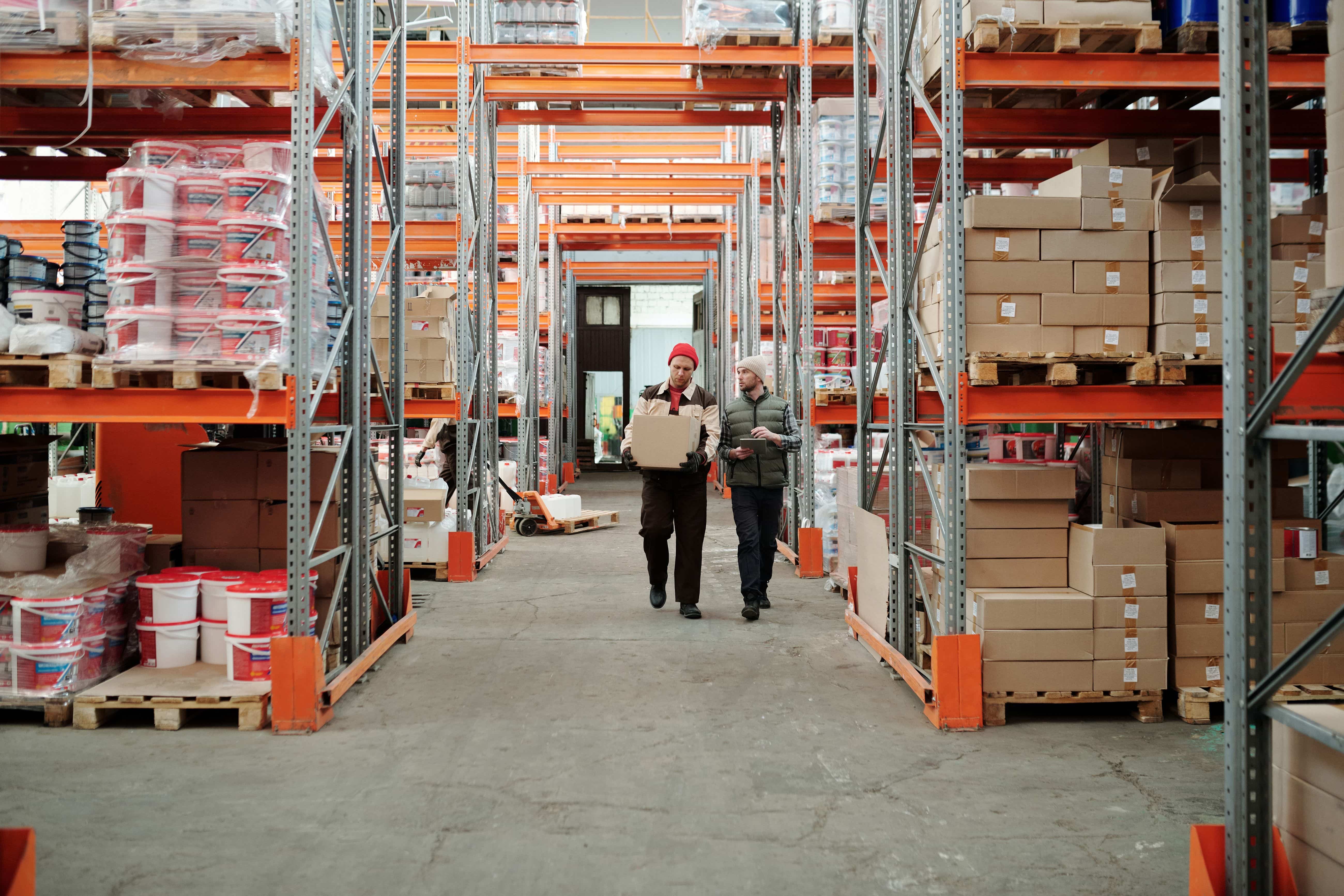
3PL fulfilment UK, what it is and how it works
Considering a 3PL for your ecommerce fulfilment? Here is what 3PL means, how it works, what it costs to run in-house, and how CSM supports growing brands.
Published
Online retail now accounts for 28% of all UK retail sales, according to the Office for National Statistics. That share has held broadly steady since the pandemic-era peak, which means fulfilment, getting orders picked, packed and delivered reliably, is no longer a side consideration for UK ecommerce businesses. It is a core part of running one.
For a growing number of brands, the answer to managing that fulfilment load is a third party logistics provider, commonly shortened to 3PL. This guide covers what 3PL fulfilment actually is, how it works day to day, what ecommerce fulfilment services typically cost compared with running fulfilment in-house, and how to work out whether a 3PL UK provider fits your business.
Whether you are comparing ecommerce fulfilment services UK wide or just starting to research the option, the fundamentals below apply regardless of scale.
What is 3PL?
What is 3PL, in plain terms: a third party logistics provider is a company that handles some or all of a business's physical order fulfilment on its behalf. Rather than storing stock, packing orders and arranging courier collections yourself, a 3PL does this for you, typically from its own warehouse space.
What is a 3PL provider in practice usually comes down to four core services: storage of your stock, picking and packing customer orders, dispatching those orders via a courier network, and managing any returns that come back.
Ecommerce fulfilment through a 3PL means your online store connects to the provider's systems, so orders flow through and get processed without you touching them manually.
How Does Third Party Logistics Fulfilment Work?
The mechanics of 3PL fulfilment are straightforward, even if the operational detail behind them is not. Order fulfilment services generally follow the same core sequence regardless of provider.
Stock Arrives at the Fulfilment Centre
Your inventory is received into a UK-based fulfilment centre, checked in and logged against your account.
Your Store Connects to the Provider's Systems
Platform integration means new orders on your website or marketplace listing are picked up automatically rather than requiring manual entry.
Orders Are Picked and Packed
When a customer places an order, warehouse staff retrieve the relevant items and pack them, often to a specification you have agreed in advance, whether that is generic packaging or branded materials.
The Order Is Dispatched
A shipping label is generated and the parcel is collected by the courier network the 3PL works with.
Returns Are Processed
If a customer sends an item back, the 3PL receives it, checks it against your returns policy and restocks it, updating your inventory count.
For businesses handling this in-house, each of these steps has to be resourced, staffed and managed directly. A 3PL takes that operational load on, in exchange for a fee structure typically based on storage, per-order pick and pack costs, and dispatch.
Why Do UK Businesses Use 3PL Fulfilment?
The case for outsourced fulfilment usually comes down to cost, capacity and complexity, three pressures that have all been increasing for UK ecommerce businesses running fulfilment in-house.
Warehousing Has Become More Expensive
Third party logistics providers and online retailers are now the leading occupiers of UK warehouse space, according to the UKWA Report 2024 produced with Savills, with online retailer warehouse occupancy up 813% over the past decade.
Prime warehouse rents have climbed accordingly, from around £6.50 per square foot in 2015 to £12.55 per square foot in 2025, Savills data shows. On top of rent, industrial and logistics rateable values rose by roughly 21% at the April 2026 business rates revaluation, according to UKWA analysis. Committing to your own warehouse lease now carries meaningfully more fixed cost risk than it did even a few years ago.
Labour Costs and Availability Are Both Under Pressure
The National Living Wage rose to £12.71 an hour from 1 April 2026, as confirmed by the Low Pay Commission, a direct floor on the cost of warehouse and picking staff.
Logistics UK's Employment and Skills Report 2026 puts the wider UK logistics workforce at around 2.6 million people, and the sector continues to report recruitment difficulty, with 26% of transport businesses reporting driver vacancies according to Department for Transport figures. Running a fulfilment operation in-house means absorbing both the cost and the recruitment risk directly.
Carrier Capacity Gets Squeezed During Peak Periods
Royal Mail's UK parcel volumes grew 8% to 424 million in the final quarter of 2025 alone, according to International Distribution Services' trading update, and the carrier introduced a peak business collection cap limiting daily volumes to three times normal capacity from August 2026.
A single-carrier setup can hit that ceiling during exactly the weeks that matter most. A 3PL working across multiple carrier networks has more flexibility to route around capacity constraints when one carrier is stretched.
Returns Are a Growing Operational Cost
Non-food online returns in the UK are forecast at £25.1bn in 2025, according to Retail Economics and ZigZag's UK Returns Benchmark, with average clothing return rates around 23.6%.
Separately, research from IMRG and nShift found that 85.6% of UK shoppers say a retailer's returns policy influences their decision to buy, and a meaningful proportion say a poor returns experience makes them less likely to shop with a retailer again. Handling returns properly is not optional, and doing it well at scale takes dedicated process and space.
None of this means speed is the only thing customers care about. A survey of 2,000 UK consumers by Locus found only 4% expect same-day delivery, while 83% consider a two to four day delivery window reasonable, so long as tracking and communication are accurate. That is a useful reminder that a 3PL's value is less about shaving hours off delivery and more about consistency, capacity and cost control.
What Costs Can 3PL Fulfilment Help You Avoid?
Set against those pressures, the appeal of outsourcing to a fulfilment centre becomes clearer. The UK third party logistics industry is valued at £22.2bn with around 17,650 businesses operating in the space, according to IBISWorld, reflecting how established and professionalised ecommerce order fulfilment has become as a specialist sector in its own right.
The wider UK logistics sector contributes £175bn in gross value added to the economy and employs roughly 8% of the UK workforce, according to Logistics UK's Logistics Report 2026. Choosing an experienced UK 3PL provider means tapping into that scale and expertise, rather than building an equivalent capability from a standing start inside a smaller ecommerce business.
3PL vs In-House Fulfilment
| In-house fulfilment | 3PL fulfilment | |
|---|---|---|
| Warehouse cost | Fixed lease, exposed to rising rents and business rates | Scales with actual stock held |
| Staffing | Direct recruitment, National Living Wage and above | Managed by the provider |
| Carrier access | Typically one or two direct relationships | Multi-carrier network |
| Peak season capacity | Constrained by your own space and staff | Provider absorbs volume spikes |
| Returns handling | Managed internally, time-intensive | Built into the service |
| Platform integration | Often manual | Automated order flow |
Ecommerce Warehousing and Pick and Pack Fulfilment
A large part of what makes ecommerce warehouse operations different from general storage is the pick and pack fulfilment process itself. Ecommerce orders are typically low volume per order but high in frequency and variety, which is a very different operational pattern from bulk pallet movements.
Ecommerce warehousing needs to be organised around fast, accurate retrieval of individual items across a wide product range, with systems that can handle order spikes without a proportional increase in errors.
This is one of the areas where a dedicated ecommerce fulfilment provider tends to outperform a general-purpose ecommerce warehouse UK operation run for other industries, since the systems and layout are built specifically around order-level picking rather than bulk logistics.
Shopify Fulfilment and Platform Integration
For ecommerce brands, Shopify fulfilment and similar platform integrations are what make outsourcing genuinely low-friction. Without a direct connection, someone still has to manually transfer order details from your store into the 3PL's system, which reintroduces exactly the kind of manual work outsourcing is meant to remove.
A proper Shopify 3PL setup means orders placed on your store flow through automatically for picking, packing and dispatch. This applies whether you are searching for Shopify fulfilment UK options specifically or comparing ecommerce fulfilment companies across several platforms at once.
CSM connects directly with Shopify, Magento, BigCommerce, Linnworks, ShipTheory and Pimento, covering most of the platforms UK ecommerce brands actually run on, and every one of these integrations is designed to remove manual work that fulfilment teams would otherwise be doing by hand. For a full guide to how each integration works, see our guide to the top ecommerce shipping integrations.
For Amazon FBM sellers managing fulfilment alongside other sales channels, see our guide to Amazon selling from the UK.
Fulfilment Services for Small Business
There is a common assumption that fulfilment services for small business owners only make sense once order volumes are already high. In practice, fulfilment services for small business UK operations have become considerably more flexible in recent years, with many 3PLs, including CSM, operating with no minimum volume commitment.
This matters because the businesses most likely to benefit from getting fulfilment off their plate early are often smaller, growing brands where the founder or a small team is currently doing the packing themselves. Waiting until volumes are already unmanageable before looking at outsourcing options means solving the problem later and under more pressure than necessary.
What to Look for in an Ecommerce Fulfilment Provider
Not every order fulfilment company is set up the same way. When evaluating 3PL companies UK businesses might work with, a few things are worth checking specifically:
No rigid minimum volume requirements. A provider that locks you into a fixed volume commitment does not suit a growing or seasonal business well.
Genuine platform integration, not manual order entry disguised as automation.
Multi-carrier dispatch, so your business is not exposed to a single carrier's capacity limits or service disruptions.
Personal account management. When something needs resolving quickly during a busy period, speaking to a named person who understands your account matters more than a generic support inbox.
International capability, if EU or worldwide sales are part of your plans. CSM's European parcel delivery and worldwide parcel delivery services cover most international destinations. If you sell into Europe, look for a provider that understands DDP shipping UK to Europe and EU customs documentation. For a full breakdown of carrier options for different international routes, see our guide to best parcel carriers for ecommerce.
How CSM Supports Ecommerce Fulfilment
CSM's London-based fulfilment centre provides ecommerce fulfilment UK brands can rely on without a minimum volume commitment. The service covers stock storage, pick and pack fulfilment, multi-carrier dispatch via UPS, DHL and DPD, full tracking and returns management, all integrated directly with your ecommerce platform through our ecommerce shipping solutions.
There are no call centres. Every account is managed personally by a named team who understand your business and can adapt as your order profile changes, whether that means a sudden seasonal spike, a new sales channel or growth into new markets. For businesses with EU ambitions, CSM's fulfilment service works alongside our EU fulfilment solutions, covering everything from DDP delivery to when it makes sense to hold stock in the EU directly.
To understand the full range of what CSM offers beyond fulfilment, including UK, European and worldwide parcel delivery, see our guide to what CSM Logistics does. If you would like to discuss whether outsourced fulfilment is the right next step for your business, contact your local CSM branch to talk it through.
Frequently Asked Questions
What is 3PL?
3PL stands for third party logistics. A 3PL provider handles some or all of a business's physical fulfilment operations on its behalf, typically including storage, order picking and packing, dispatch and returns management, so the business does not have to run these processes in-house.
What is a 3PL Provider Exactly?
A 3PL provider is a company that operates warehouse space and fulfilment processes on behalf of other businesses. Rather than each ecommerce brand building its own warehouse, staff and courier relationships, an ecommerce 3PL offers this as a service, usually integrated directly with the brand's online store.
How Much Does 3PL Fulfilment Cost Compared to Running It In-House?
Costs vary by provider, order volume and product type, but 3PL fulfilment is typically charged through a combination of storage fees, per-order pick and pack charges and dispatch costs.
Running fulfilment in-house means absorbing fixed warehouse rent, business rates and staffing costs directly, all of which have risen in recent years. A 3PL removes the fixed-cost exposure in exchange for a variable, volume-linked fee.
Is There a Minimum Order Volume to Use a 3PL?
This varies by provider. Some 3PLs require a minimum monthly order volume, while others, including CSM, operate with no minimum volume commitment, making outsourced fulfilment accessible to smaller and growing ecommerce brands as well as established, high-volume operations.
Does CSM Integrate with Shopify and Other Ecommerce Platforms?
Yes. CSM integrates directly with Shopify, Magento, BigCommerce, Linnworks, ShipTheory and Pimento, allowing orders to flow automatically from your store into the fulfilment process without manual data entry.
Can a 3PL Handle International and EU Orders?
Many 3PLs, including CSM, can dispatch orders internationally as well as domestically. For EU orders specifically, look for a provider that offers DDP shipping, so your EU customers are not charged unexpected duties on delivery.
Related articles
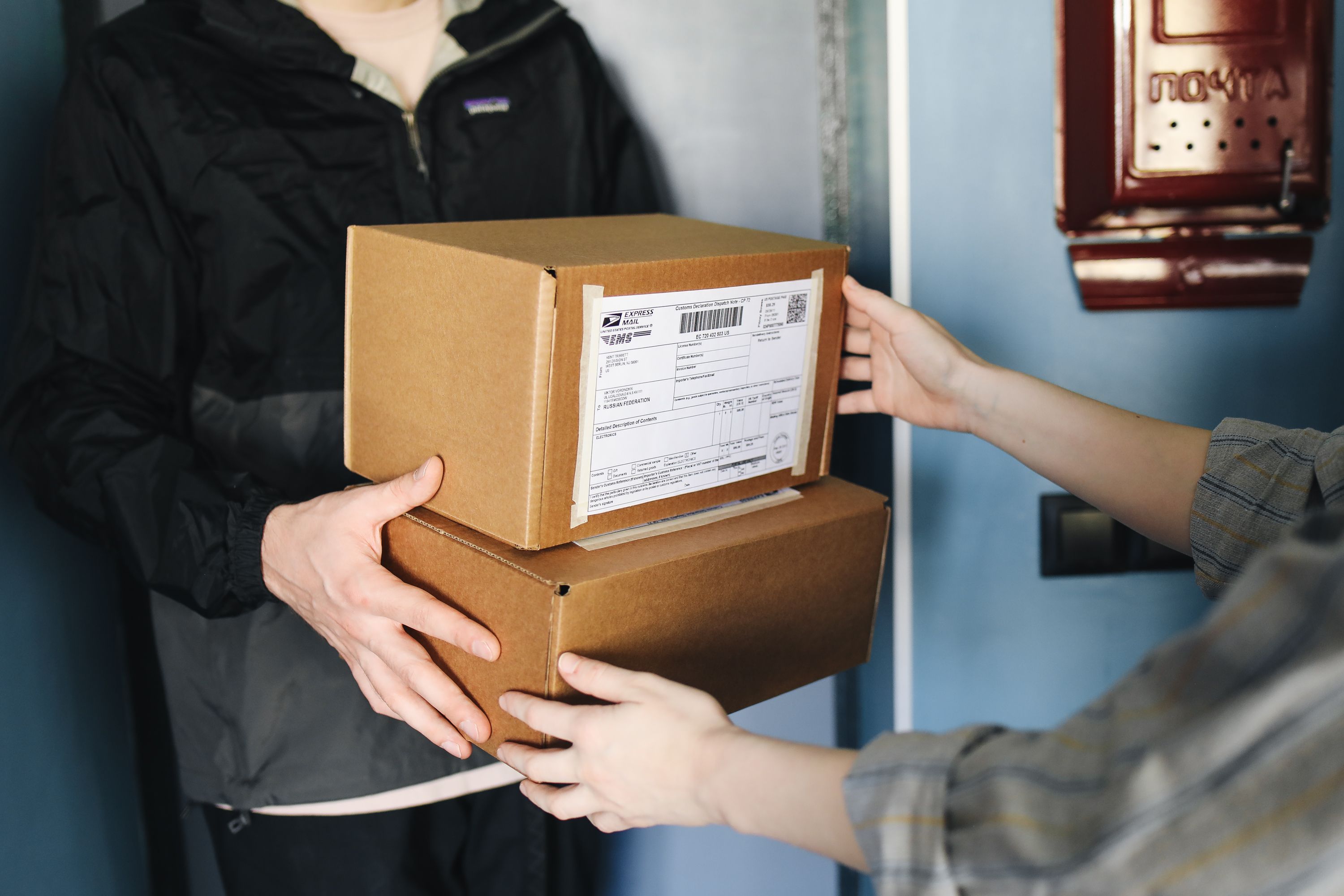
What same day delivery is and when a business actually needs it?
Same day delivery explained for UK businesses. See how it works, when you need it, how it differs from next day and when to speak to your local CSM branch.
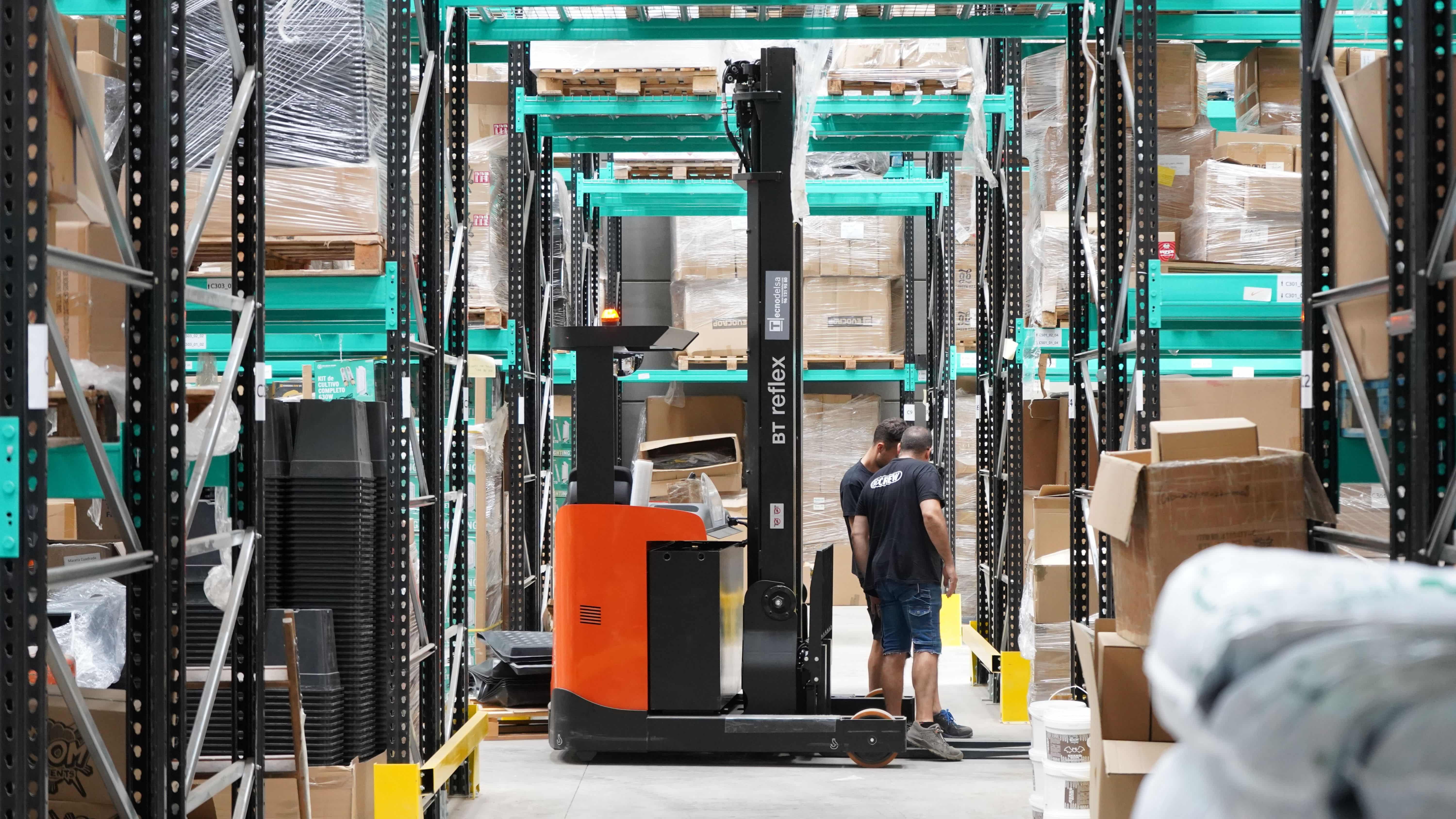
Ecommerce fulfilment services in the UK: what they are and why more brands are outsourcing
Ecommerce fulfilment services explained: what's included, how outsourcing works, and why more UK brands are moving fulfilment off-site.

Returns and reverse logistics, why UK ecommerce returns cost more than you think
Returns are one of the biggest hidden costs in UK ecommerce. Here is what reverse logistics actually involves, what returns really cost, and how to manage it.
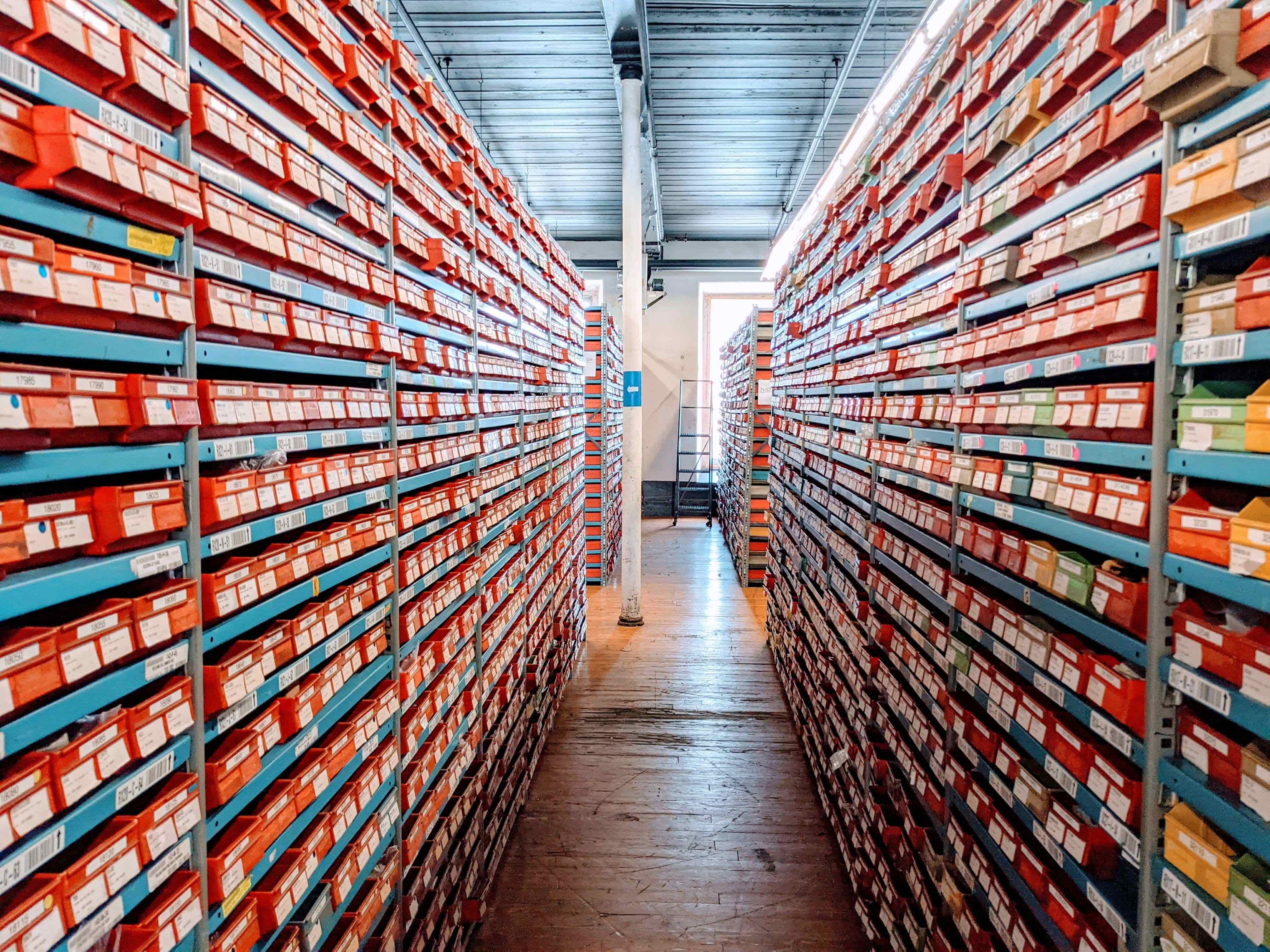
Peak season 2026, a UK ecommerce fulfilment readiness guide
September is when peak season 2026 planning needs to happen. Here is a dated readiness checklist for UK ecommerce brands covering stock, carriers and returns.
Personal service at every stage of the process.
Get started today with a logistics partner you can rely on.