
UK to EU Shipping Solutions for Ecommerce Brands
Selling to EU customers from your UK online store? This guide covers the shipping setup, VAT options and carrier choices that make EU delivery work for ecommerce brands.
Published
For UK online stores, the opportunity to sell to Europe from the UK is significant. The EU is a market of 27 countries and roughly 450 million consumers, and for many UK ecommerce brands it represents a natural and commercially attractive next step after the domestic market.
The challenge is that ecommerce cross border shipping between the UK and EU has become considerably more complex since January 2021. Customs declarations, VAT obligations, import duties, delivery experience failures and unexpected charges at the door have all become real operational concerns for UK online store shipping to Europe.
For brands that get the setup right, EU shipping is manageable and profitable. For those that do not, it is a source of customer complaints, failed deliveries and eroded margins.
This guide covers the practical decisions UK ecommerce EU delivery requires: how to handle VAT and duties, how to choose the right carrier setup, what your EU customers will actually experience, and how to build a reliable EU shipping foundation as your volumes grow.
Why the EU Customer Experience Has Changed
Before Brexit, shipping to European customers from a UK online store was effectively the same as shipping domestically. No customs declarations, no import duties, no VAT complications at the border. EU customers ordered, paid once and received their goods.
Since January 2021, that has changed for UK ecommerce EU delivery. Every parcel crossing from the UK into Europe now requires customs documentation, and import VAT applies in the destination country on every commercial shipment. For ecommerce brands that were not prepared, the impact was immediate: EU customers started receiving unexpected invoices from couriers before their parcels would be released. Many refused delivery, many more complained and some never ordered again.
The brands that maintained strong EU customer delivery UK ecommerce performance were those that made deliberate choices about how to handle VAT, duties and carrier selection before the problems arrived. Getting this right is not complicated, but it does require a clear understanding of the three core decisions every UK ecommerce brand shipping to Europe needs to make.
The Three Core Decisions for EU Shipping Solutions Ecommerce Brands Need to Make
Decision 1: How Will You Handle Duties and VAT?
This is the most commercially important decision for UK ecommerce shipping Europe, and it directly determines what your EU customers experience at the point of delivery.
DDP (Delivered Duty Paid): the seller pays everything upfront
Under DDP, you pay all import duties and VAT before the parcel is delivered. Your EU customer pays once at checkout and the goods arrive at the door with no further charges. From the customer's perspective, the experience is identical to a domestic purchase.
DDP ecommerce shipping Europe is the approach that most directly protects the customer experience. It eliminates the most common cause of failed deliveries: the unexpected duty invoice landing on the customer after they have already paid. It also means faster customs clearance, since there is no hold waiting for the recipient to settle charges.
The trade-off is that you carry the cost of duties and VAT upfront, which needs to be factored into your EU pricing. For most B2C ecommerce brands selling to EU consumers, DDP is the recommended approach. For full detail on how it works, see our guide to DDP shipping UK to Europe.
DAP/DDU (Delivered at Place / Delivered Duty Unpaid): the customer pays on arrival
Under DAP, you pay shipping costs but the customer is responsible for import duties and VAT when the parcel arrives. This is simpler operationally but creates a poor customer experience for B2C sales: the customer is contacted by the carrier or customs authority and asked to pay before delivery proceeds. Refusal rates and return rates both increase significantly under this model.
DAP is more appropriate for B2B trade where the buyer expects to handle their own import process, or for higher-value goods above €150 where IOSS (see below) does not apply and the buyer has been clearly informed of the duty position at checkout.
IOSS (Import One-Stop Shop): simplified VAT for low-value B2C sales
For B2C sales of goods valued at €150 or less imported into the EU, the Import One-Stop Shop (IOSS) allows UK sellers to register once in an EU member state and collect VAT from EU customers at checkout. A single monthly return covers all EU sales, rather than requiring separate VAT registration in each country.
IOSS is particularly relevant for high-volume ecommerce brands with a consistent EU order flow at lower price points. When goods are shipped under IOSS, they clear customs faster because VAT has already been collected and declared. This makes IOSS a practical complement to DDP for eligible shipments.
If you sell through Amazon or other major marketplaces in the EU, the marketplace is typically registered for IOSS and handles VAT collection on your behalf. You will need to capture the marketplace's IOSS number and include it in your shipping data to ensure VAT is handled correctly at import.
Decision 2: Which Carrier Setup Works Best for EU Delivery?
Finding the best EU shipping solution UK ecommerce brands can rely on depends on your destination mix, order volumes and service level requirements.
Single carrier vs multi-carrier
Going direct with a single carrier is straightforward at low volumes. As your EU order flow grows across multiple countries, a single carrier's network and pricing structure becomes a constraint. Different carriers have different strengths in different EU markets, and a carrier that performs well in Germany may not be the strongest option for Italy or Poland.
Multi carrier ecommerce shipping EU gives you the flexibility to route each order through the carrier best suited to that destination and service level. For ecommerce brands, this typically means combining two or three carriers based on geography: one strong in Western Europe, one stronger in Central and Eastern Europe or for express requirements.
CSM gives UK ecommerce brands access to UPS, DHL and DPD through a single account, so you get multi-carrier coverage without managing separate contracts, integrations and invoices. For a full breakdown of which carrier suits which EU shipping scenario, see our guide to best parcel carriers for ecommerce.
Service levels for EU ecommerce parcel delivery
Speed expectations vary by EU market and product category. For fashion, beauty and lifestyle brands, fast EU delivery ecommerce performance has become a differentiator: EU consumers increasingly expect next day delivery Europe ecommerce parity with domestic options. For less time-sensitive categories, economy road services are often more cost-effective and still meet customer expectations.
CSM's European parcel delivery covers most EU destinations with timed options including pre-9am, pre-noon and next-day by end of day, alongside economy road services for cost-sensitive shipments. All services are fully tracked through your CSM account portal.
Decision 3: How Will You Connect Your Store to Your Shipping Operation?
For ecommerce brands, the operational efficiency of your EU shipping setup depends heavily on how well your store connects to your courier account. Manual order entry at any stage introduces errors, slows your dispatch team and becomes a bottleneck as EU volumes grow.
A proper shipping integration removes this entirely. Your UK online store shipping to Europe connects directly to your courier account, orders import automatically, labels are generated in bulk and the right carrier is selected for each destination without manual intervention.
Shopify EU shipping is one of the most common integration requirements for UK ecommerce brands. CSM's direct Shopify integration means EU orders placed on your Shopify store flow through automatically for label generation and dispatch. The same applies for WooCommerce EU shipping via ShipTheory, which connects WooCommerce to your CSM account through an intermediary platform that supports rule-based carrier selection.
For brands using Magento, BigCommerce, Linnworks, Squarespace or other platforms, CSM's ecommerce shipping solutions cover all major platforms with the same automated order flow. For a full guide to the available integrations and how to configure them, see our guide to ecommerce shipping solutions.
What EU Shipping Costs Look Like for Ecommerce Brands
Ecommerce shipping costs Europe is a question that involves several components, and understanding each one helps you price for EU markets accurately.
Outbound delivery cost: the per-parcel charge for delivery from the UK to the EU destination. This varies by carrier, destination country, parcel weight and service level. Multi-carrier access through a logistics partner like CSM typically gives better rates than going direct at low to moderate volumes.
Duty and VAT costs under DDP: if you ship DDP, you carry the cost of import duties and VAT in the destination country. These need to be built into your EU product pricing. Duty rates vary by product type and HS code. VAT rates vary by EU member state, ranging from 17% in Luxembourg to 27% in Hungary.
Customs processing fees: a per-shipment fee applied by the carrier for customs handling. Under DDP, this is paid by the seller and under DAP, it may be passed to the customer.
Returns costs: EU consumer protection law gives buyers a 14-day right to return. Cross-border returns from EU customers need to be factored into your landed cost per order.
For shipping solutions for online sellers that are just starting EU sales, the simplest approach is to test with a handful of EU markets, understand your actual landed cost per order including returns, and price accordingly before scaling to the full EU.
How Your EU Customers Experience Each Setup
This is the commercial reality that makes the three decisions above matter:
| Setup | Customer experience at delivery |
|---|---|
| DDP | Pays once at checkout, goods arrive with no further charges. Clean experience. |
| DAP/DDU | Contacted by courier or customs to pay duties before delivery. Risk of refusal. |
| IOSS (sub-€150) | VAT collected at checkout, fast customs clearance, no surprise charges. |
| No setup / default | Unpredictable: customer may or may not be charged. High refusal and return risk. |
For EU shipping for online retailers, the default outcome without a deliberate setup is almost always the worst outcome for the customer. The good news is that DDP and IOSS together cover most B2C EU ecommerce scenarios reliably.
Scaling EU Shipping: From First Orders to High Volume
The right UK to EU delivery solutions at low volume are not always the right solutions at high volume. Here is how the picture typically evolves for UK ecommerce EU delivery:
Starting out (low EU volume): Ship DDP from your UK operation via a multi-carrier logistics partner. Keep stock in one location, keep operations simple. Focus on getting the documentation and carrier setup right before scaling volume.
Growing EU volume: As EU orders increase across multiple markets, ecommerce EU delivery solutions that automate carrier selection become important. A proper platform integration removes manual work from dispatch. A named account manager who understands your EU order profile helps resolve issues quickly.
High EU volume: At significant scale, ecommerce fulfilment UK to Europe from a UK 3PL base remains practical for many brands. For those with very high, consistent EU volumes concentrated in specific markets, holding stock in an EU warehouse reduces delivery times and per-shipment customs costs. For more detail on when that makes sense, see our guide to EU fulfilment solutions.
How CSM Supports EU Shipping for Ecommerce Brands
CSM is an ecommerce shipping partner Europe-focused UK ecommerce brands can use to access UPS, DHL and DPD through a single account, with DDP EU delivery available and direct integration with all major ecommerce platforms.
From a London-based fulfilment centre, CSM also provides ecommerce European delivery service alongside 3PL fulfilment UK for brands ready to outsource storage, pick, pack and dispatch entirely.
There are no call centres. Every account is managed by a named team who understands your platform setup, your EU destination mix and your order profile. When you need to adjust carrier routing for a specific market, add a new EU destination or resolve a customs query, you speak directly to the person who manages your account.
For everything you need to know about documentation, EORI numbers and customs compliance for UK to EU shipments, see our UK to EU shipping guide. For a full overview of what changed after Brexit and what your business needs to have in place, see our guide to shipping from the UK to the EU after Brexit.
To discuss your EU shipping requirements or get a setup that works for your ecommerce brand, contact your local CSM branch or open an account today.
Frequently Asked Questions
What is the Best EU Shipping Solution for a UK Ecommerce Brand?
The best EU shipping solutions ecommerce brands can use are combined DDP terms so EU customers receive their orders without unexpected charges, multi-carrier access for coverage across different EU markets, and a direct platform integration so orders flow automatically from your store to dispatch. CSM provides all three through a single account with no minimum volume commitment.
What is the Difference Between DDP and DDU for Ecommerce Shipping to Europe?
Under DDP, the seller pays all import duties and VAT before the parcel arrives, giving EU customers a clean, no-surprise delivery experience. Under DDU (now formally DAP), the customer pays duties and VAT on arrival. For B2C ecommerce, DDP almost always produces better outcomes. For full detail, see our guide to DDP shipping UK to Europe.
Do I Need to Register for VAT in EU Countries to Sell to EU Customers?
For B2C sales of goods valued at €150 or less, IOSS registration allows you to collect EU VAT at checkout through a single registration and submit one monthly return covering all EU member states. For higher-value goods or B2B sales, VAT obligations depend on how the import is structured and which country the goods enter. This is worth clarifying with a tax adviser before scaling EU sales significantly.
How Do I Connect My Shopify Store to EU Shipping?
CSM's direct Shopify EU shipping integration connects your store to your CSM courier account. EU orders flow automatically for label generation and dispatch without manual data entry. WooCommerce EU shipping is available via ShipTheory, which connects to CSM through a rule-based shipping management platform. See our ecommerce integrations page for all supported platforms.
What is the Cheapest Way to Ship to EU Customers from the UK?
Economy road services are the most cost-effective option for ecommerce parcel delivery Europe where speed is not the primary consideration. For most ecommerce brands, the total cost picture including duties, VAT and returns handling under DDP is more important than the headline per-parcel rate. A logistics partner like CSM can help you understand the full landed cost per EU order before you scale.
Can CSM Handle International Ecommerce Shipping Beyond Europe?
Yes. CSM's account covers international ecommerce shipping to most worldwide destinations via UPS, DHL and DPD, with timed and economy options and full end-to-end tracking. For more on worldwide delivery options, see our worldwide parcel delivery page. Your account manager can advise on carrier routing, documentation requirements and service levels for specific international markets.
Related articles

Returns and reverse logistics, why UK ecommerce returns cost more than you think
Returns are one of the biggest hidden costs in UK ecommerce. Here is what reverse logistics actually involves, what returns really cost, and how to manage it.
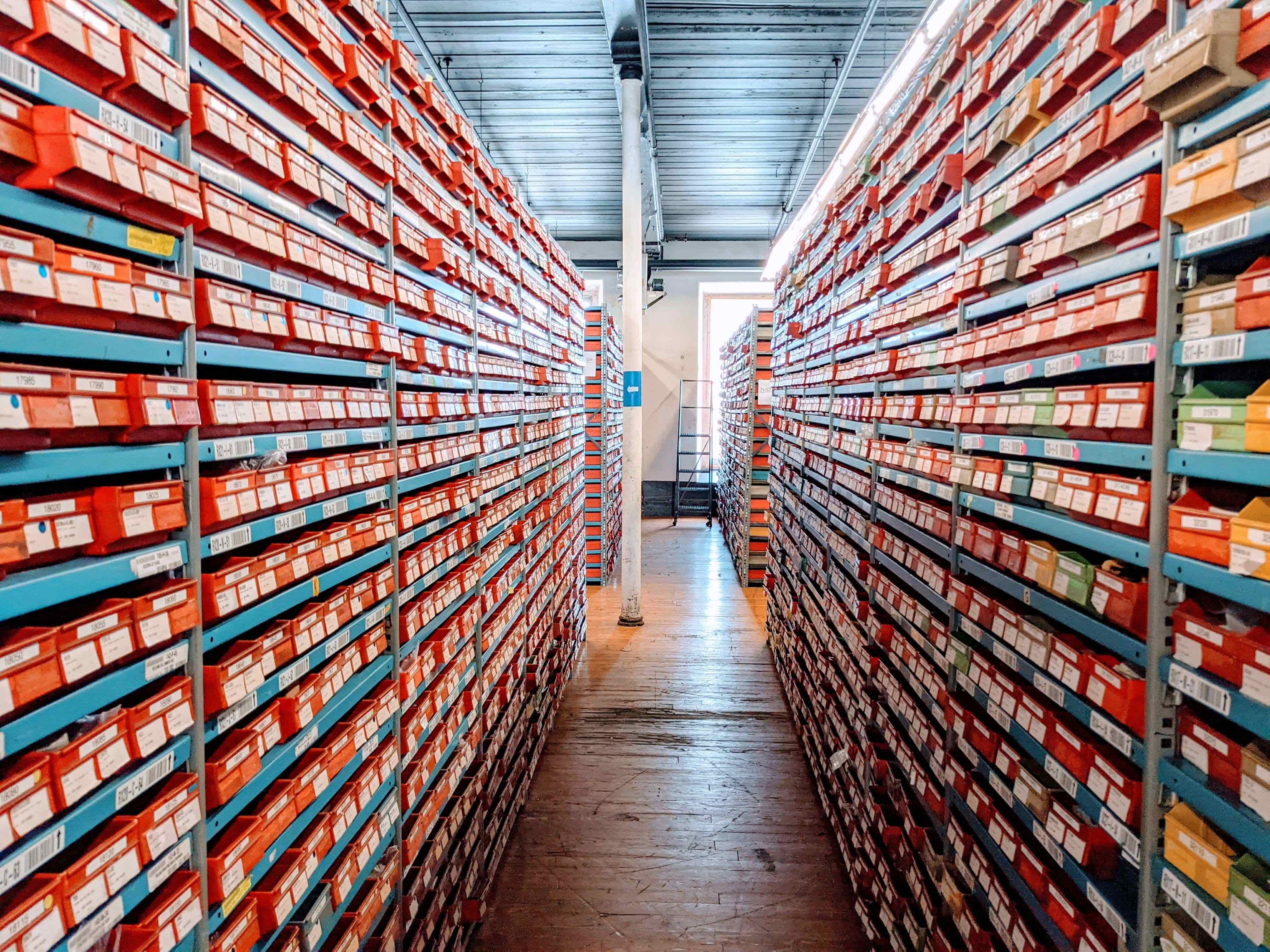
Peak season 2026, a UK ecommerce fulfilment readiness guide
September is when peak season 2026 planning needs to happen. Here is a dated readiness checklist for UK ecommerce brands covering stock, carriers and returns.
Does the EU de minimis removal affect UK sellers shipping to Europe?
The EU scrapped its €150 duty-free threshold from 1 July 2026. Here is what changed, whether it affects UK sellers, and how to keep shipments moving smoothly.
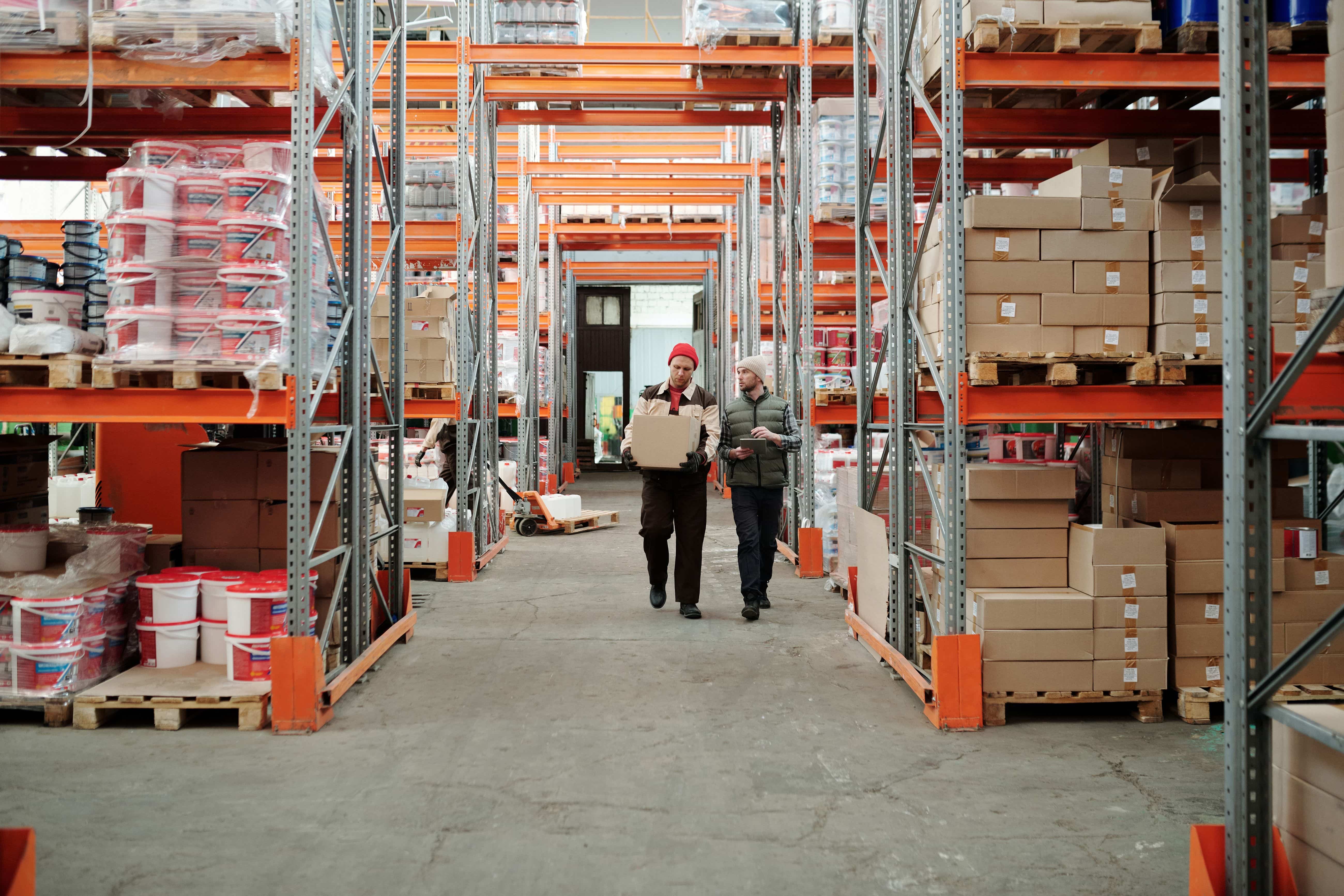
3PL fulfilment UK, what it is and how it works
Considering a 3PL for your ecommerce fulfilment? Here is what 3PL means, how it works, what it costs to run in-house, and how CSM supports growing brands.
Personal service at every stage of the process.
Get started today with a logistics partner you can rely on.